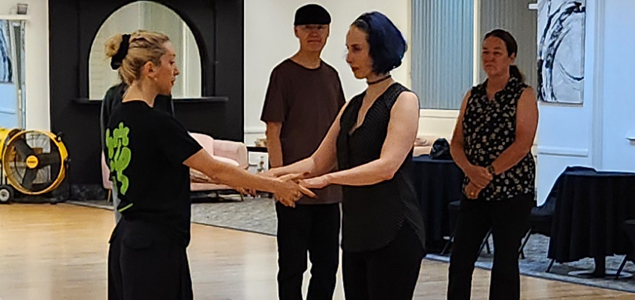
One of the defining elements of West Coast Swing is the connection between partners. This connection allows dancers to communicate smoothly through subtle physical and visual cues. Leaders and followers coordinate using hand holds, arm tension, and body movement. Together, these elements create the push-and-pull dynamic known as elasticity. Consequently, the follower moves fluidly within the slot while the leader controls direction, timing, and styling.
Unlike some partner dances that enforce strict roles, West Coast Swing encourages fluid interaction. Followers can add improvisation, styling, and personal flair within the patterns. Meanwhile, leaders guide with gentle, clear cues. This balance creates a dynamic, interactive dance experience where both partners contribute equally to the performance.
Connection in WCS fosters a musical conversation between dancers. Leaders and followers interpret the music together, adjusting movements to match rhythm, phrasing, and tempo. As a result, each dance becomes unique and expressive. Dancers can experiment with timing, body isolations, and styling to reflect the music. Additionally, this interaction builds trust, confidence, and creativity, making West Coast Swing engaging and enjoyable for social dancers and competitors alike.
In Las Vegas, strong connection enhances the experience at studios, socials, workshops, and competitions.
Mastering WCS connection helps dancers navigate crowded dance floors, maintain smooth patterns, and enjoy improvisation without losing structure. Ultimately, connection transforms West Coast Swing from simple steps into a collaborative, expressive, and joyful social dance experience.
Where to DANCE WCS in Las Vegas