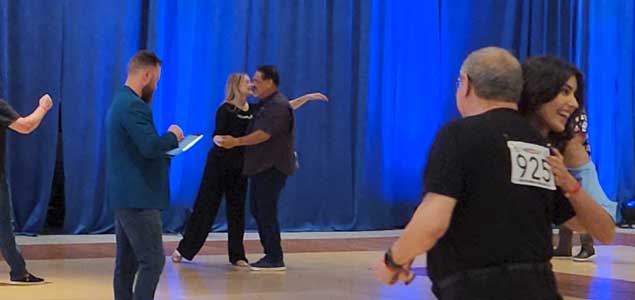
How to Practice at Home
Build Better Balance and Posture
Start every home practice by creating enough clear space to move safely in every direction. First, stand tall with relaxed knees, level hips, and comfortable weight over the balls of your feet. Then, shift your weight slowly without lifting the receiving foot or tipping your upper body. This simple drill teaches control, which improves every anchor, walk, and direction change. Next, practice balancing on each foot for fifteen seconds while keeping your shoulders quiet. However, avoid locking your knees, because flexible joints help you respond smoothly during partnered dancing. Also, use a mirror to confirm that your spine stays lifted as your hips remain relaxed.
Sharpen Your Footwork and Timing
West Coast Swing drills become more effective when you practice them with clear rhythms. Begin with walking triples, and count one-and-two while keeping every step underneath your body. Afterward, repeat the pattern sideways, backward, and diagonally to develop adaptable foot placement. Moreover, use a metronome or familiar song to maintain steady timing without rushing. Next, alternate single steps, triple steps, and holds while continuing the rhythm internally. Finally, record your feet and check whether each weight transfer finishes before the next step begins. Instead, reduce speed whenever your feet become noisy, tense, or uncertain.
Improve Anchors and Body Control
A strong anchor creates stretch, stability, and readiness for the next pattern. Therefore, practice triple-step anchors while moving your center slightly away from an imaginary partner. Keep your feet active, yet allow your body movement to remain calm and controlled. Then, vary the anchor’s direction while preserving balanced posture and consistent rhythm. Additionally, practice rolling through each foot from the ball toward the heel without collapsing backward. Although solo practice cannot recreate partnership, these details prepare your body for clearer connection. Meanwhile, test small knee bends to discover how leg compression supports smoother movement.
Add Musicality to Your Practice
Musical practice turns useful mechanics into expressive West Coast Swing dancing. First, choose one song and identify its strongest beat, melody, breaks, and repeated phrases. Then, walk the rhythm before adding triples, pauses, or simple body isolations. For example, make smooth movements during sustained vocals and sharper movements during strong percussion. Meanwhile, keep your steps small enough to protect balance and preserve accurate timing. Next, repeat favorite sections and explore three movement qualities without changing the basic timing. Finally, film one complete song, celebrate one improvement, and choose one detail for tomorrow. Therefore, keep a short practice journal to track goals, discoveries, and recurring challenges. Consistent, focused practice builds confidence; consequently, your partner dancing will feel clearer, calmer, and more musical.
Where to DANCE WCS in Las Vegas